
Ancestral Healing & Epigenetic Trauma
What you feel now may have roots that were planted long before you.
Unexplained fears. Emotional heaviness. Repeating relationship patterns. A sense of carrying something that never truly belonged to you.
Ancestral healing and epigenetic research point to the same truth: what is lived through does not simply disappear.
It is remembered in the body and the field, shaping emotions, reactions, and symptoms across generations. Healing does not always begin with you. Sometimes, it begins through you.
Why do certain feelings follow me through life?

Many people experience emotions, inner blocks or repeating patterns that cannot be explained by their personal history alone. You may recognize yourself in experiences like these:
Feeling sadness, fear or emotional heaviness without a clear reason
Repeating relationship patterns that feel impossible to break
A sense of being held back, even after therapy or personal growth work
Emotional closeness that feels unsafe or difficult
Feelings of guilt, shame or loneliness that do not feel truly personal
The sense of carrying something that never fully belonged to you
In ancestral healing, these experiences are often understood as signs of inherited emotional patterns or generational trauma. We all come from an ancestral line.
Whether we know our family history in detail or not, we are shaped by experiences that lived before us. War, loss, displacement, silence, survival and unresolved ancestral trauma. Not because something is wrong with you. But because memory does not live only in the mind.
It lives in the body.
In the nervous system.
And in epigenetic memory, where emotional experiences can be carried and passed down through generations. This is where ancestral healing and generational trauma work begin.

Epigenetics and inherited trauma
Epigenetics helps us understand how experiences leave traces in the human system, even when the events themselves happened long before we were born. It looks at how genes are activated or quieted by life experiences, without changing the genes themselves.
In simple terms: what happened in the past can influence how the body, the nervous system and emotional responses function in the present. Severe stress, war, hunger, violence, loss or long periods of fear can leave biological and emotional imprints.
These imprints shape how the nervous system reacts, how safe or unsafe the world feels, and how emotions are processed in everyday life. Research has shown that children and even grandchildren of traumatized individuals often carry similar emotional, physical or stress patterns, even when they never lived through the original events themselves.
This is why many people ask questions like:
Can trauma be inherited?
Why do I react so strongly when nothing “bad” is happening now?
Why does my body hold tension, fear or exhaustion without a clear cause?

Epigenetics offers an explanation that bridges science and lived experience. It shows that inherited trauma is real, but also that it is not fixed. What once helped a family line survive can later become a burden. And what was once necessary can, with awareness, be gently released.
This is where ancestral healing and ancestral lineage healing meet epigenetic understanding. Not as theory, but as a way of making sense of patterns that repeat across generations.
Many people come to this work asking:
What is ancestral healing, really?
How is ancestral lineage healing different from therapy?
What is ancestral or intergenerational somatic healing?
The answer lies in recognizing that memory does not live only in the mind. It also lives in the body, in emotional responses, in relationship patterns and in the nervous system itself.
Inherited wounds passed down through family lines do not mean something is “wrong” with you. They point to ancestral roots that are asking to be seen, understood and integrated differently.
Epigenetics does not replace spiritual work. It gives language to something many people have already felt: that healing the present often means listening to the past.
When life repeats itself without you choosing it

Many people come to a quiet realization at some point in their lives:
I seem to be living something that did not start with me. Not because of personal failure. Not because of a lack of effort. But because inherited emotional patterns can move through families for generations, shaping feelings, choices and relationships without conscious awareness.
You may notice this through experiences such as:
emotional distance or longing that repeats in relationships
feeling constantly drained, numb or disconnected
financial struggles or fear of being seen, despite talent and effort
returning toxic dynamics or power imbalances
a deep sense of not fully belonging, even when life looks “fine”
These patterns are rarely random.
They often originate in generational trauma, stored not only in stories, but in the body, the nervous system and what science now calls epigenetic inheritance. Stress responses learned during war, loss, hunger or oppression can leave epigenetic markers that influence how later generations experience fear, safety, trust and closeness.
What once ensured survival can later feel like being stuck without a clear reason. Many people describe it as:
carrying pain that does not feel fully theirs
reacting more strongly than a situation seems to require
sensing old fear, grief or shame without a personal origin
This is not imagination.
And it is not weakness.
It is how trauma stored in DNA and the emotional field continues to seek resolution. When these patterns are gently recognized at their origin, the repetition begins to loosen. Not by force. But by understanding what has been carried and allowing it to soften.
What children may carry and how healing can soften what is passed on
Many parents notice something that cannot be fully explained by upbringing or life circumstances. A child may seem anxious, overly alert, emotionally withdrawn or deeply sensitive, even when their own life has been safe and loving.
Research into epigenetic memory and intergenerational trauma shows that intense experiences can leave traces that continue beyond one lifetime. Not as conscious memories, but as emotional imprints held within the body and nervous system.
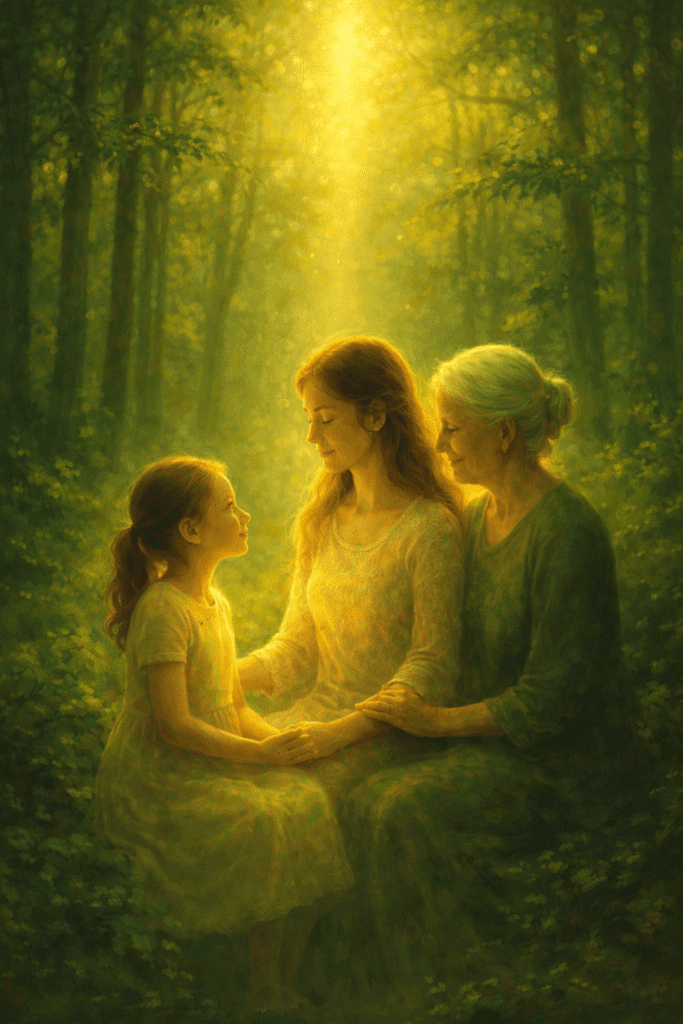
Stress, fear, loss or shock can influence how the stress response system develops across generations. This can affect how safety, closeness and emotional regulation are experienced later on.
Children may express inherited emotional patterns through
• heightened anxiety or nervousness
• difficulty calming down or feeling secure
• strong emotional reactions without a clear trigger
• physical symptoms linked to somatic trauma
• a sense of carrying emotions that do not match their own story
This is not a psychological flaw.
And it is not a personal failure.
It is often trauma carried through the family line, stored as cellular memory rather than conscious recollection. When inherited patterns are gently recognized, the body no longer needs to hold them in the same way. The nervous system can begin to settle. Not by force. But through awareness and regulation.
Many women notice that as they work with inherited trauma and emotional patterns passed down through generations, something shifts in their children as well.
Less tension.
More emotional stability.
A greater sense of safety.
Healing does not only move backward into the past. It also reshapes what flows forward.
The Witch Wound and the Feminine Line
Many women feel a quiet fear around visibility, intuition, or spiritual expression without knowing where it comes from. A hesitation to speak openly. A tendency to shrink, hide, or doubt one’s own perception. A deep inner knowing paired with self-censorship. This experience is often referred to as the Witch Wound.
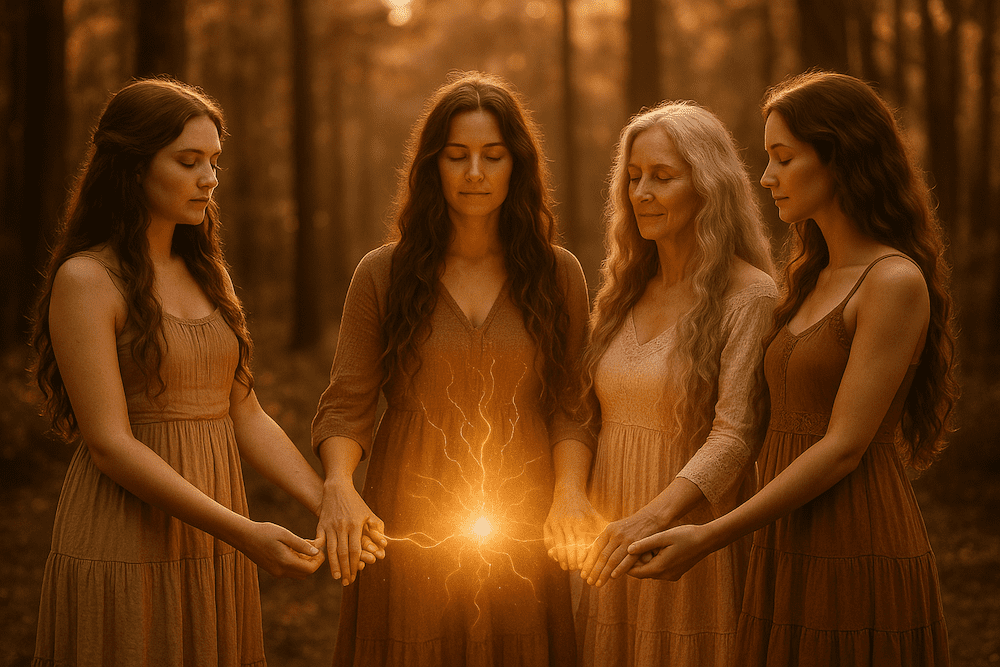
The witch wound is not about fantasy or identity.
It is a collective memory carried through the feminine lineage, shaped by centuries of suppression, persecution, and silencing of women who held intuitive, healing, or spiritual knowledge.
In many family lines, this memory lives on as:
fear of being seen or heard
discomfort with spiritual gifts
guilt around intuition or inner authority
mistrust toward one’s own wisdom
These patterns do not arise from the personal mind alone. They are often rooted in female line trauma and suppressed feminine wisdom, passed down quietly through generations. When this layer is gently acknowledged, something begins to shift.
Not by force. But by remembrance.
When Science Meets Lived Experience

In recent years, research has begun to explore what many people have felt for a long time. That experiences do not simply disappear.
They leave imprints.
Modern studies on epigenetic memory suggest that intense stress, fear, or trauma can influence how the nervous system responds long after the original event has passed. Not only within one lifetime, but across generations. This does not mean memories are consciously remembered.
It means they can remain present as emotional imprints, stress responses, or a constant sense of inner tension without a clear cause. Researchers studying intergenerational trauma have observed changes in stress regulation, emotional sensitivity, and nervous system patterns in descendants of people who lived through extreme events such as war, displacement, or persecution.
What is especially important to understand: These imprints are not a flaw. They are signs of a system that once learned how to survive.
In my work, science and lived experience meet in a grounded way. Not to label or diagnose, but to understand why certain reactions, fears, or emotional states feel deeper than the present moment. Because what lives in the nervous system, the cellular memory, and the emotional field often asks to be met with awareness, not explanation alone.
What Changes When These Patterns Are Gently Addressed
When inherited patterns are brought into awareness, something fundamental begins to shift. Not because anything is forced.
Not because something is “fixed”.
But because what was carried unconsciously is finally seen. Many women describe a subtle but profound change once these deeper layers are acknowledged. A softening inside.
More inner space.
A sense of relief that cannot always be explained, but is clearly felt. When inherited emotional patterns and intergenerational imprints are gently addressed, the nervous system often responds first. There is less inner pressure.
Less emotional reactivity.
More capacity to stay present with oneself and with others.
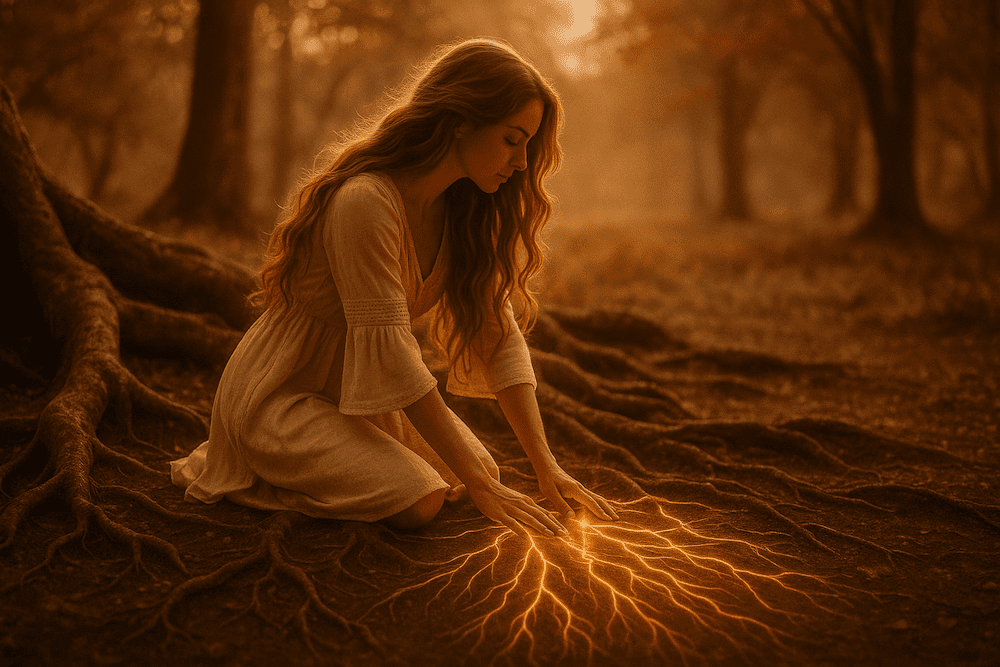
Over time, this can influence how relationships are experienced, how boundaries are felt, and how life is met from within. What once felt like “this is just how I am” begins to loosen.
Not because your history disappears, but because it no longer has to live itself through you. This kind of work is not about changing the past.
It is about changing your relationship to what was passed down. And from that place, something new becomes possible. Not as a concept. But as lived experience.
FAQ
Many people sense that certain emotions or patterns don’t fully belong to their personal story. Inherited emotional patterns often feel older, heavier, or strangely familiar without a clear origin in your own life.
Yes. Trauma and emotional memory do not require conscious knowledge to be passed on. Experiences can live on through the nervous system, the body, and the emotional field, even when family stories were never spoken.
Epigenetic memory describes how intense experiences such as stress, fear, loss, or survival can leave imprints on how the body and nervous system respond. These imprints can be passed on without changing DNA itself.
It touches both worlds.
Modern research explores inherited stress responses, while ancestral healing works with lived experience, emotional memory, and the human field beyond purely rational explanation.
The witch wound refers to inherited fear, silencing, or suppression of feminine intuition and wisdom. It often lives quietly in the female line and can show up as self-doubt, fear of visibility, or a deep sense of holding back.
Yes. When origins are gently recognized, the nervous system often begins to regulate naturally. Many people experience emotional relief, clarity, and a sense of inner settling without force.
Do you recognize yourself in this?
If you recognized yourself in some of these questions, this does not mean something is wrong with you. It may simply mean that something older is asking to be seen.

My work and method
I read the ancestral and energetic field and perceive where trauma is stored, whether in the nervous system, the body, or the lineage itself. I recognize inherited and epigenetic patterns, as well as unresolved ancestral trauma that is still active in the present. I do not analyze stories or search for explanations.
I name what is present and work with it until the system can regulate and release. This work is embodied, direct, and grounded. It meets what has been carried across generations and allows it to settle, so clarity, safety, and self-agency can return.
If something in you recognizes itself here, you do not have to walk this path alone. This work is not about fixing or forcing change. It is an invitation to listen, to understand, and to gently release what no longer needs to be carried.